
Aquarium Water Testing
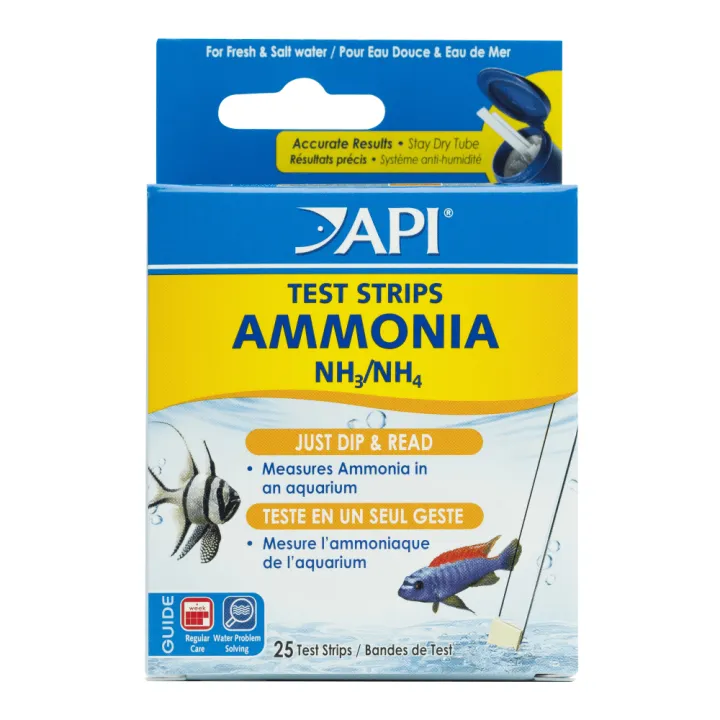
API Ammonia Test Strips
Monitors water quality and prevents invisible water problems that can be harmful to fish
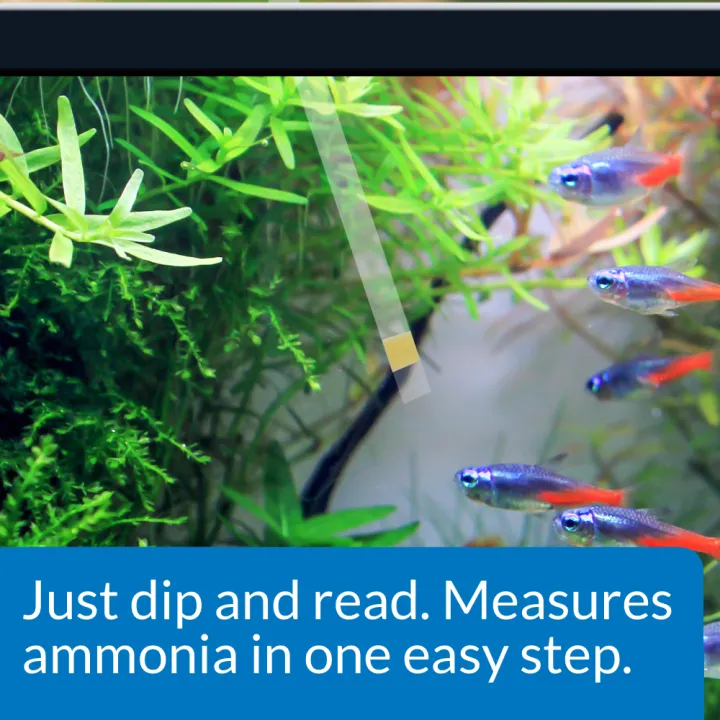
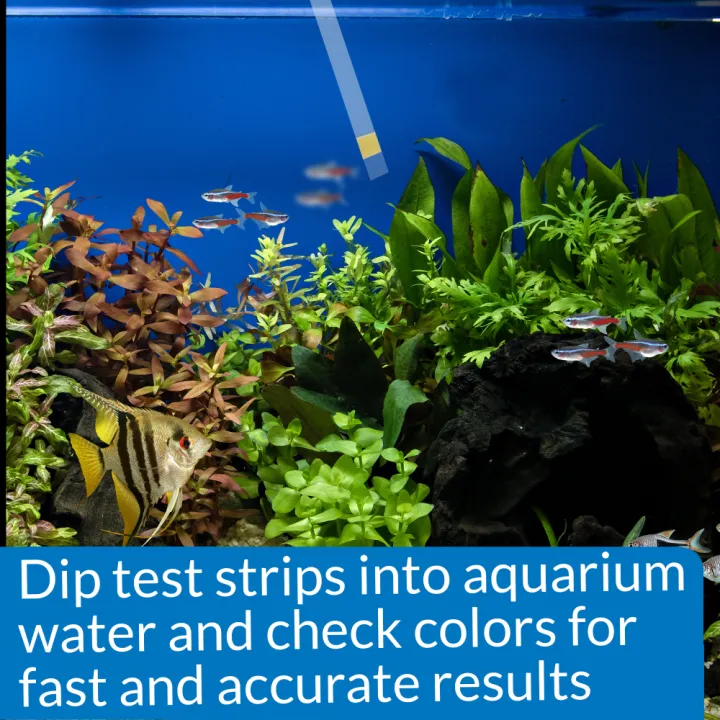
Quickly and easily check your aquarium's ammonia levels with API AMMONIA TEST STRIPS. Fish continually release ammonia into the aquarium through their gills, urine and solid waste. Uneaten food and decaying organic matter also add ammonia to the water. Ammonia is toxic to fish and can cause gill damage, stress and death. Regular testing is recommended because ammonia levels can build quickly due to fish waste and uneaten food. Simply dip the test strip into the water, then compare the results with the precise, easy-to-read color-coded chart to determine if any action should be taken. The chart includes recommendations on how to treat the water and neutralize ammonia. Safe for use in fresh and salt water.
With API aquarium products, it’s easy to keep a beautiful saltwater, freshwater or reef aquarium. For almost 60 years API has developed premium solutions with proven and effective results for your family and ours. API offers a range of testing kits, water conditioners, and nutritionally superior food, because we’re dedicated to making a better underwater world. They work to provide a safe, hospitable environment for fish such as tropical community fish, cichlids, goldfish and more. At API, we understand the rewards and relaxation of fishkeeping because we have a passion for fish too.
Related Products
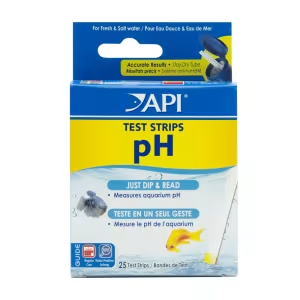
Keep your fish healthy and thriving by testing your aquarium water's pH regularly with easy-to-us
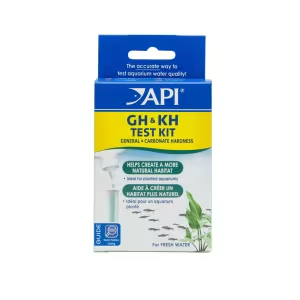
Keep your fish healthy and thriving by testing your aquarium water's GH levels regularly with thi
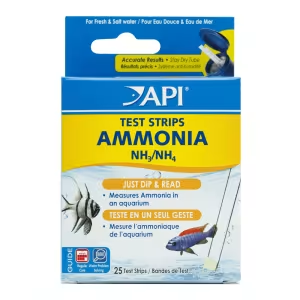
Quickly and easily check your aquarium's ammonia levels with API AMMONIA TEST STRIPS.
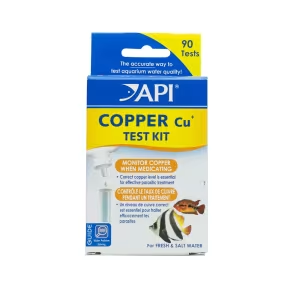
Keep your fish healthy and thriving by testing your aquarium water's copper levels regularly with
Frequently Asked Questions (FAQs)
Yes, API AMMONIA TEST STRIPS test solely for ammonia in your aquarium water. Test strips are extremely accurate in showing high ammonia levels – simply compare your results to the precise color charts that come with the product, and take the appropriate actions to correct unsafe parameters for your fish.